In the realm of networking, routers and switches play pivotal roles in shaping the architecture of computer networks. These devices are essential for directing data traffic, ensuring efficient communication between devices, and managing network performance. Understanding their functions can greatly enhance one’s grasp of how networks operate and improve the overall connectivity experience.
Routers connect different networks and direct data packets between them, acting as traffic controllers in a vast digital landscape. Switches, on the other hand, operate within a single network, connecting devices and allowing them to communicate efficiently. Together, they form the backbone of any robust network infrastructure, making their roles indispensable for both small businesses and large enterprises.
As technology evolves, the demands on network architecture increase, highlighting the need for an effective interplay between routers and switches. A deeper exploration of these devices reveals their intricate functionalities and how they contribute to seamless networking. Understanding these components empowers individuals and organizations to optimize their network setup.
Fundamental Functions of Routers and Switches
Routers and switches play essential roles in directing and managing data traffic across networks. Their functions ensure efficient communication between devices, utilizing addresses and protocols to maintain seamless connectivity.
Packet Forwarding and Data Transmission
Routers and switches manage how data packets are forwarded between network devices. Routers determine the best path for packets by analyzing their headers and comparing routing tables. They employ algorithms to navigate intricate networks, ensuring that the data reaches its intended destination swiftly.
Switches operate at Layer 2 of the OSI model and focus on data transmission within local area networks (LANs). They receive data packets and use MAC addresses to forward them to the correct device, minimizing collisions and maximizing bandwidth usage. This process greatly enhances network efficiency.
Layer 2 and Layer 3 Operations
Layer 2 operations involve the data link layer and primarily deal with MAC address manipulation. Switches use MAC addresses to create a forwarding table, mapping devices to specific ports. This allows packets to move efficiently within the LAN, ensuring minimal delay.
Layer 3 operations occur at the network layer, where routers handle IP addressing. They process packets based on destination IP addresses, leveraging routing tables to determine the optimal path. Routers manage traffic between different networks, enabling connectivity across diverse geographic locations and internet domains.
MAC Addresses and IP Addresses
MAC addresses serve as unique identifiers for devices in a local network. Each device has a specific 48-bit MAC address assigned by the manufacturer. Switches utilize these addresses to forward packets accurately within the local environment.
IP addresses, on the other hand, are used for network routing and identification across multiple networks. An IP address can be dynamic or static, typically formatted as a 32-bit or 128-bit number. Routers utilize IP addresses to ensure data packets are sent to the correct global destination, facilitating communication across the internet.
Integration of Routers and Switches in Network Architecture
Routers and switches are crucial for creating efficient and robust network architectures. They enable effective communication across devices, manage network segments, and facilitate the organization of local and wide area networks.
Connecting Devices in Local and Wide Area Networks
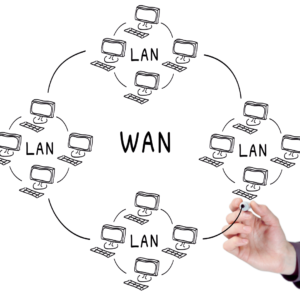
Routers and switches connect various devices in both local area networks (LANs) and wide area networks (WANs). Switches function primarily within a LAN, linking multiple computers and network devices. They operate at the data link layer to forward data to specific devices using MAC addresses.
In contrast, routers connect different LANs or networks. Operating at the network layer, they use IP addresses to determine the best path for data transmission between networks. This allows for inter-network connectivity, ensuring data reaches its destination regardless of the location. The combination of switches and routers creates a seamless communication environment across different network types.
Enabling Communication Between Network Segments
Routers and switches facilitate smooth communication between various network segments. Switches manage traffic within a segment, reducing congestion by directing packets to specific devices. This is achieved through switching tables, which store the MAC addresses of connected devices.
Routers bridge different segments or networks. They analyze the destination addresses in data packets, making intelligent routing decisions to optimize traffic flow. Routers also serve as a point of entry and exit for data leaving or entering a network. This capability is essential for maintaining effective communication between diverse network architectures.
Role in Subnetting and Gateways
Subnetting is a technique that divides larger networks into smaller, manageable subnets. Routers play a vital role in this process by routing traffic between subnets. They use subnet masks to define the range of IP addresses belonging to each subnet, ensuring that data can be accurately directed.
Gateways are specialized routers that serve as access points between different networks. They translate data from one protocol to another, enabling communication between networks with differing architectures. The integration of routers and switches enhances a network’s ability to scale effectively while maintaining optimal communication across multiple subnets and gateways.
Network Security and Advanced Features
Network security is essential for protecting data and infrastructure. Advanced features such as firewalls and VLANs play a critical role in managing threats and optimizing performance.
Implementing Firewalls for Protection
Firewalls are pivotal in establishing a network’s first line of defense. They monitor and control incoming and outgoing traffic based on predetermined security rules. This ability to filter traffic helps in blocking unauthorized access and potential threats.
Types of firewalls include hardware and software solutions. Hardware firewalls are standalone devices that sit between a network and its connection to the internet, while software firewalls operate on individual devices.
Implementing both types can provide layered security. Regular updates and configurations are vital to adapt to emerging threats and vulnerabilities in network security.
Traffic Management and VLANs
Traffic management enhances network efficiency and security. VLANs (Virtual Local Area Networks) allow the segmentation of a network into smaller, manageable parts. This segmentation improves performance and isolates sensitive data.
By grouping devices based on function rather than physical location, VLANs can prioritize network traffic more effectively. This is particularly useful in environments requiring high bandwidth for specific applications.
Additionally, VLANs contribute to better security by restricting access to sensitive information based on user roles or departments, ensuring that only authorized personnel can access critical areas of the network.
Separating Network Traffic
Separating network traffic is essential for optimizing performance and enhancing security. By using switches, administrators can intelligently direct data across various paths, reducing congestion and improving response times.
Segmentation strategies include using dedicated switches for different traffic types—voice, video, and data—which helps in managing bandwidth effectively.
Moreover, implementing policies that classify and route traffic accordingly safeguards against potential security breaches. This separation ensures that even if one part of the network is compromised, others remain secure, providing a robust defense against threats.
Other Key Network Devices and Their Interactions
In modern network architecture, several devices complement routers and switches. Understanding devices such as hubs and how they have evolved is essential for a comprehensive view of network functionality and performance.
Hubs and Their Role in Modern Networks
Hubs serve as basic network devices that connect multiple Ethernet devices, allowing them to communicate. Unlike switches, hubs broadcast data to all ports, which can lead to network inefficiencies.
- Simple Connectivity: Hubs facilitate simple connections in small networks.
- Limited Intelligence: They lack the ability to filter traffic, unlike switches.
Though largely replaced by switches due to performance limitations, hubs can still find utility in specific low-traffic scenarios. Some small setups or legacy systems may still utilize hubs for straightforward connectivity without the need for advanced features.
Evolution of Network Device Capabilities
Network devices have significantly evolved to meet increasing demands for speed and efficiency. Devices like switches have transitioned from basic to more advanced through the implementation of features such as VLAN support and intelligent traffic management.
- Smart Switches: These can segment and direct data traffic more effectively.
- Increased Bandwidth: Higher data rates have become standard to accommodate diverse applications.
The integration of power over Ethernet (PoE) has further enhanced device functionality, allowing data and electrical power to be transmitted through a single cable. This evolution has fundamentally changed how networks are structured and optimized for performance.